
Octopuses have three hearts and blue blood
And maybe a different kind of consciousness.
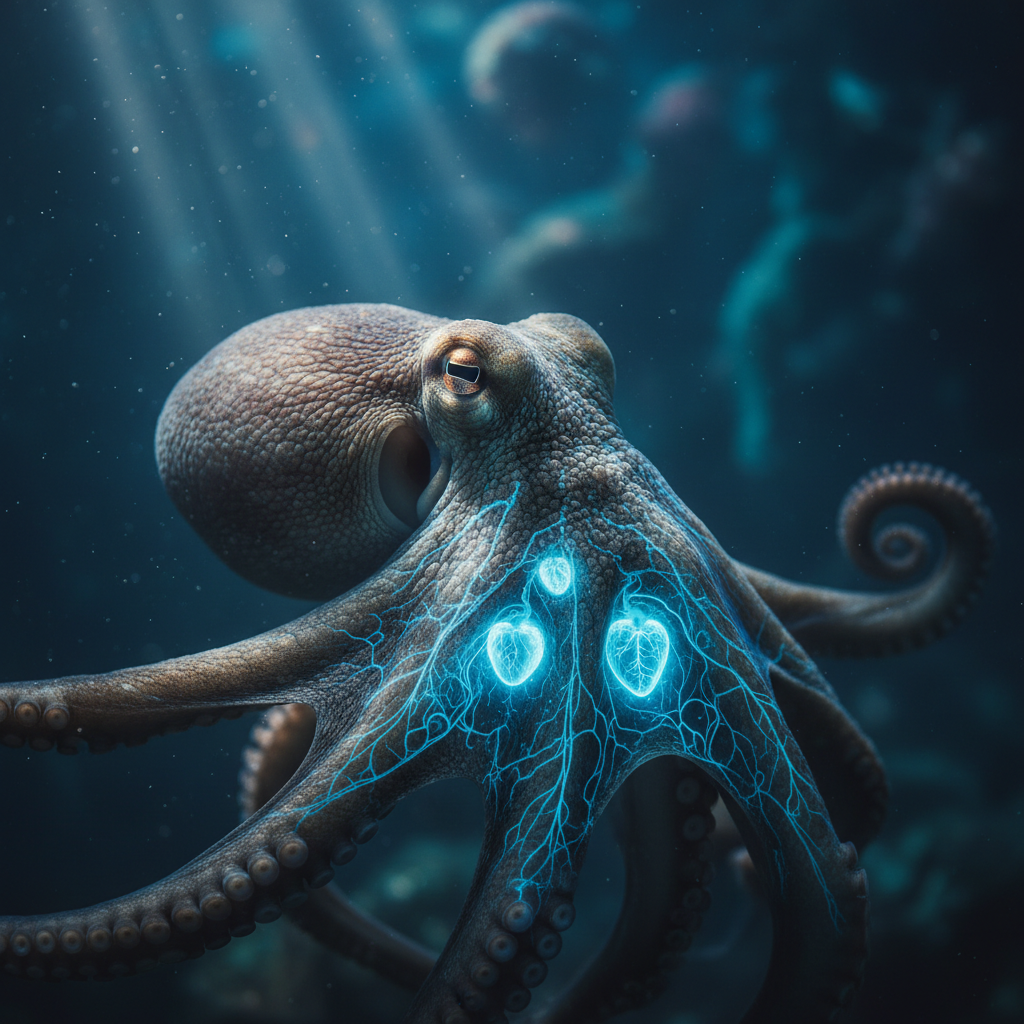
A single heartbeat pulses, strong and steady, through most of the animal kingdom. But beneath the ocean's sun-dappled surface, an octopus moves with three. Each beat propels a cerulean current, a visible divergence from the crimson flow of terrestrial life.
Two hearts, aptly named branchial hearts, dedicate their rhythm to driving blood through the octopus's gills, optimizing oxygen uptake from the water. A third, larger systemic heart, then circulates this richly oxygenated blood to the body's tissues. This triple-pump system becomes particularly crucial when the octopus swims, as its systemic heart must pause, leaving the body reliant on the branchial hearts alone for gill perfusion.
The blood itself takes on a striking blue hue due to hemocyanin, a copper-based protein. Unlike the iron in hemoglobin that binds oxygen in vertebrates, copper proves more efficient at low temperatures and reduced oxygen concentrations, conditions common in many marine environments.
This specialized circulatory architecture, alongside a unique oxygen-carrying compound, represents a profound evolutionary adaptation. It allows octopuses to maintain high metabolic rates in their often demanding aquatic habitats, powering their complex behaviors and remarkable intelligence.
Octopus blood can lose 90% of its oxygen and still sustain the animal.

Owls turn their heads 270°. Here's how
One unbelievable thing. Every Sunday.
60 seconds. No spam. Unsubscribe anytime.
🦖
Discussion (0)
Loading…