
You sleep with millions of skin-eating mites every night
Microscopic dust mites survive entirely on the dead skin cells you shed every day.
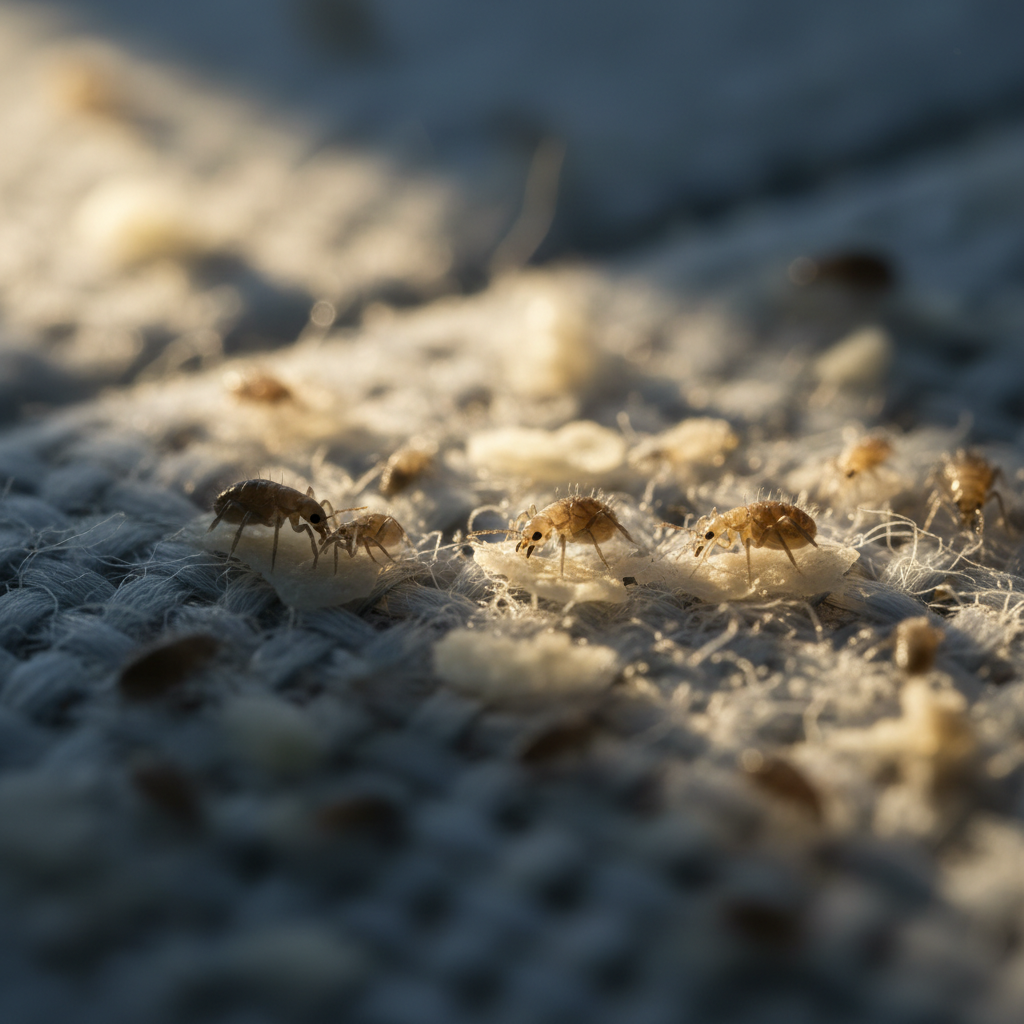
The primary food source for dust mites is you. Specifically, they eat the 1.5 grams of dead skin cells the average human sheds every single day—enough to feed one million of these microscopic scavengers simultaneously.
Dust mites don't drink water. Instead, they absorb moisture directly from the air using specialized glands on the outside of their bodies. This is why they thrive in the humid microclimates of your pillows, carpets, and mattresses, where body heat and sweat create the perfect breeding ground.
A typical mattress can house anywhere from 100,000 to 10 million mites. They do not bite or burrow into living flesh; they simply wait for the debris of your life to fall into the fibers of your bedding. They are so tiny that 20 of them could fit on the head of a pin.
The real problem for humans isn't the mites themselves, but their waste. A single mite produces about 20 waste pellets a day, which contain a specific protein that triggers asthma and allergies. In an older pillow, a significant percentage of its total weight can actually be composed of dead mites and their accumulated droppings.
Even more unsettling is that dust mites are closely related to spiders and ticks, sporting eight legs and a translucent body that makes them invisible to the naked eye.

The Forest That is Actually Just One Tree
One unbelievable thing. Every Sunday.
60 seconds. No spam. Unsubscribe anytime.
🦖
Discussion (0)
Loading…