Why Boiling Water Beats Cold Water to the Ice Tray
The Mpemba Effect is a counterintuitive phenomenon where hot water freezes significantly faster than cold water.
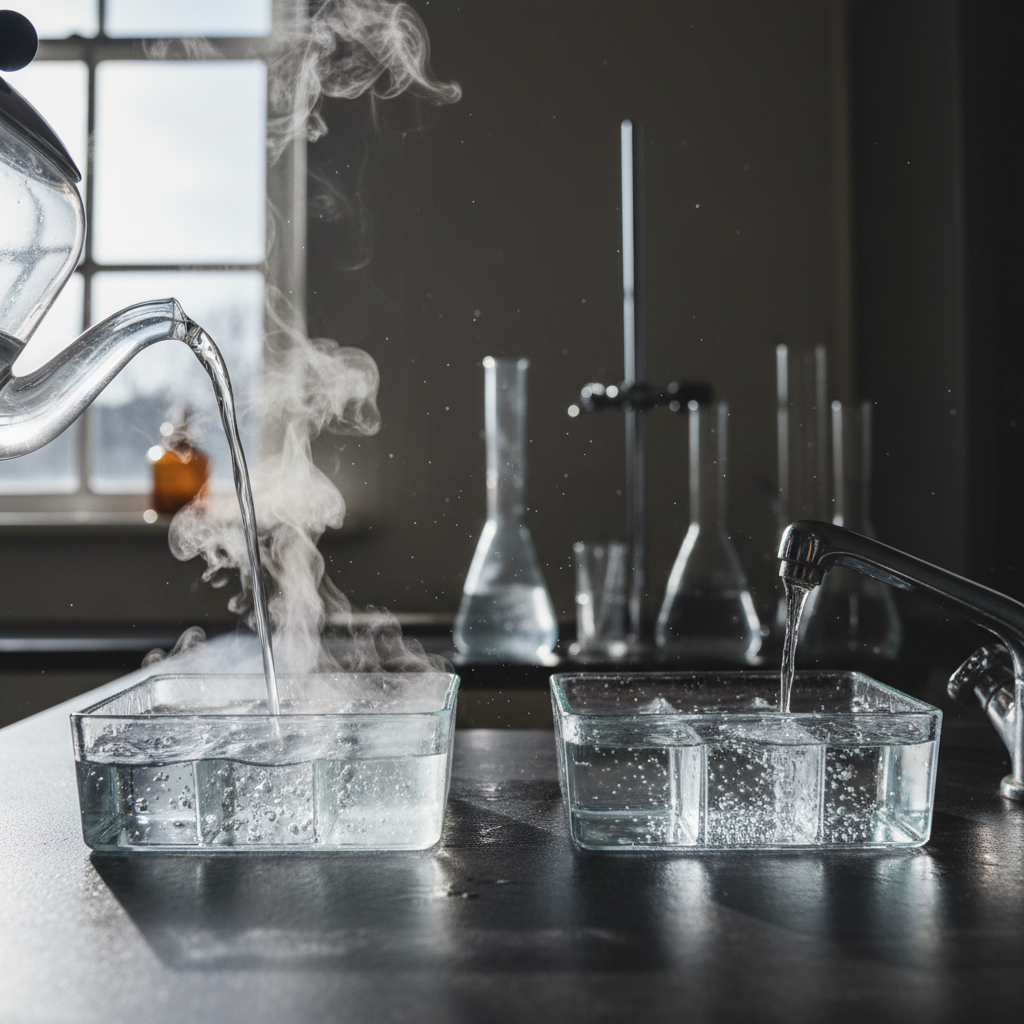
If you put a cup of boiling water and a cup of cold water in the freezer, the boiling one will often turn to ice first. This glitch in physics is known as the Mpemba Effect.
Aristotle noticed it thousands of years ago, but modern science still hasn't fully agreed on why it happens. One leading theory involves evaporation; because the hot water is steaming, it loses mass, leaving less water behind to freeze.
Another factor is convection. The hot water moves more violently within the cup, transferring its heat to the freezer’s air much faster than the stagnant cold water.
There is also the 'frost' factor. A hot container can melt a thin layer of frost on the freezer shelf, creating better thermal contact with the cooling coils.
Hydrogen bonds might be the ultimate culprit. In hot water, these bonds are stretched out, storing energy like a pulled rubber band. When they snap back as the water cools, they release that energy and speed up the cooling process.
Surprisingly, this effect doesn't happen every time, and the exact temperature 'sweet spot' is still a matter of heated debate in laboratories.

The Desert Where It Hasn't Rained in Millions of Years
One unbelievable thing. Every Sunday.
60 seconds. No spam. Unsubscribe anytime.
🦖
Discussion (0)
Loading…