Earth had purple plants before green ones
For a billion years, the planet probably looked like Mars in lavender.
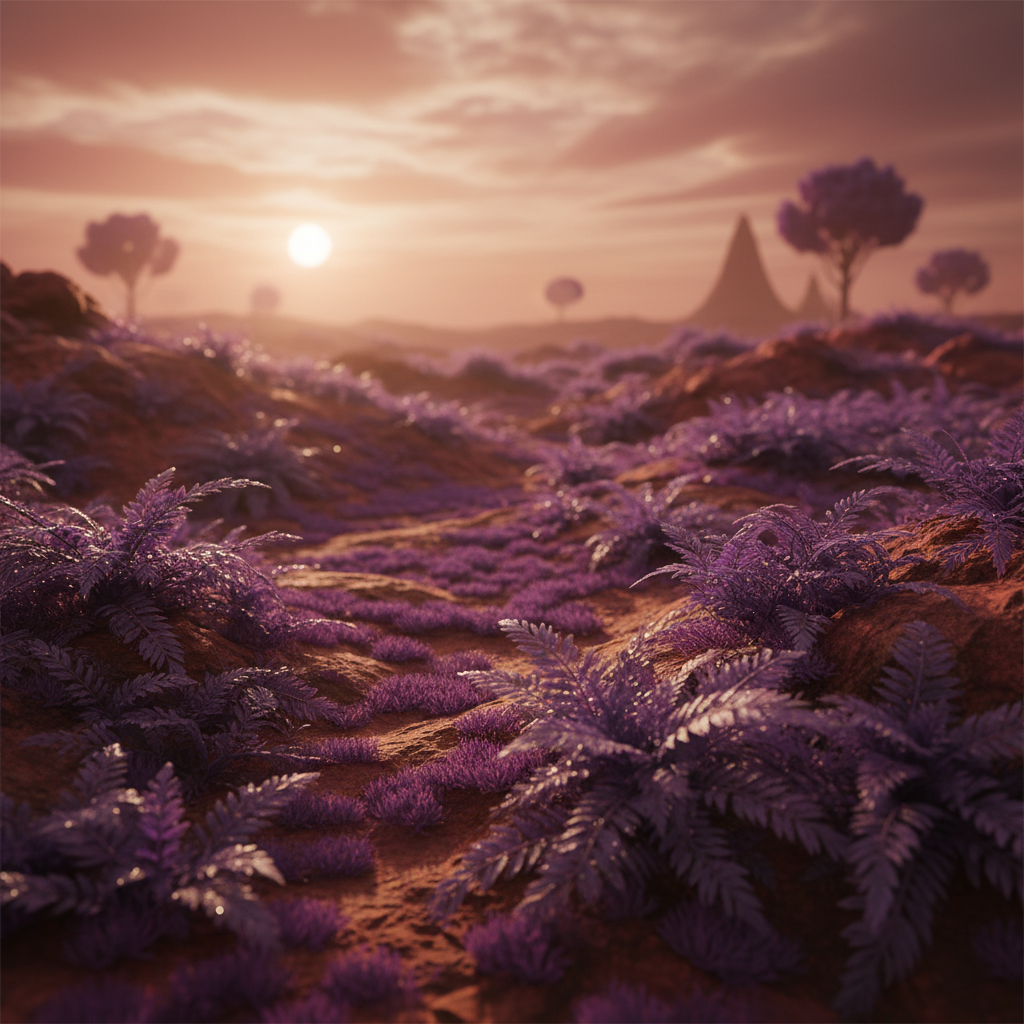
Before Earth was green, it may have been purple — and the plants we have today are the survivors that lost the first round.
The hypothesis, proposed by microbiologist Shiladitya DasSarma in 2007, starts with a pigment called retinal. Retinal is the same molecule your eye uses to detect light, and it absorbs the green wavelengths the Sun delivers most strongly. It is also simple, ancient, and far easier to evolve than chlorophyll. The earliest light-harvesting microbes, DasSarma argues, would have used it — and a microbe full of retinal looks purple.
For perhaps a billion years, purple haloarchaea may have dominated Earth's shallow seas and shorelines, soaking up the green light and reflecting back the red and blue. When chlorophyll-based life finally appeared, it had to make do with the wavelengths the purple microbes weren't using — which is exactly the spectrum chlorophyll absorbs, and exactly why plants reflect green today.
If the story is right, the colour of every forest you have ever seen is a record of who came second.
Sources (2) — tap to view

Murder hornets decapitate bees with chilling efficiency
One unbelievable thing. Every Sunday.
60 seconds. No spam. Unsubscribe anytime.
🦖
Discussion (0)
Loading…