
Your dog's secret litter size trick
Turns out, your furry friend can pack 'em in more than you thought!
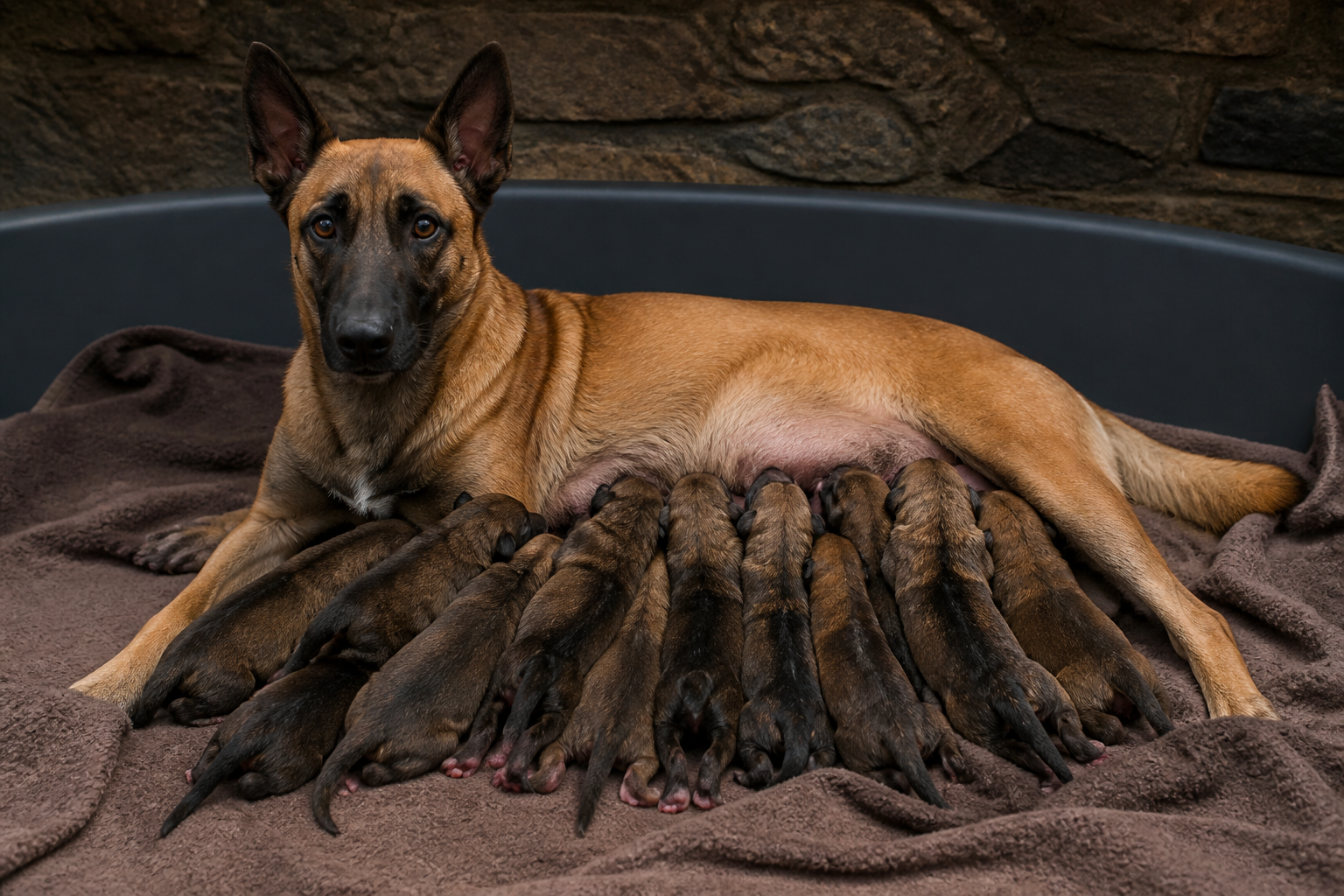

Picture a single dog giving birth to eighteen puppies
How hard do you think this was for science to crack?
The answer says more about you than about the discovery.
- Turns out, your furry friend can pack 'em in more than you thought!
- Once conceived, these tiny embryos embark on a rapid growth journey.
- The birthing process itself for a super litter is an epic event, often lasting many hours as the mother's body works to expel each puppy.
It sounds like a tall tale: a single dog delivering eighteen puppies. Yet, these "super litters" happen, forcing a mother's body to perform an almost incomprehensible biological marathon. The average dog litter is a modest five to six, meaning a super litter nearly triples the number of tiny lives a mother must gestate, birth, and nourish. The sheer scale of development required to create so many individual organisms inside one body is a testament to mammalian reproductive resilience.
So how do they do it? The key lies in ovulation. Unlike human females who typically release one egg per cycle, dogs are induced ovulators, releasing multiple eggs – sometimes over twenty – from both ovaries at once. But it's not just the number of eggs; it's the timing. Canine ovulation can stretch over several days, meaning a mother can be impregnated by multiple males, fertilizing different batches of eggs at different times within the same reproductive cycle. Each puppy in a super litter might even have a different father, making the family tree a bit more tangled than it appears.
Once conceived, these tiny embryos embark on a rapid growth journey. The canine uterus, a Y-shaped organ, is incredibly elastic and stretches to accommodate the burgeoning litter. Each embryo develops within its own amniotic sac, drawing nutrients directly from the mother's bloodstream through its individual placenta. The more puppies, the more demand on the mother's physiological resources, taxing her circulatory system, nutrient reserves, and even her bone density.
The birthing process itself for a super litter is an epic event, often lasting many hours as the mother's body works to expel each puppy. Post-birth, the challenge continues. Eighteen hungry mouths demand constant nourishment, pushing the mother's milk production to its absolute limit. Breeders and veterinarians must often step in to hand-feed and supplement the weakest pups, ensuring all these tiny survivors have a chance. It's a harsh reminder that even with advanced care, such an extreme biological undertaking pushes the boundaries of what a single animal can endure.
Two questions. Prove you actually read it.
Get both right and this discovery is certified: +50 XP toward your next rank. No account needed.
Sources (1) — tap to view
100 questions that make people say “wait, what?”
Get the complete Ultimate Trivia Pack instantly. It is free right now, works on mobile, and is printable.

Discussion (0)
No account needed. Drop your name, say what surprised you.
Loading…