
Why tall buildings have invisible walls
Ever felt an unexpected gust while walking past a skyscraper? These 'ghost forces' are an invisible danger, created by the very buildings designed to protect us.
You're walking down a city street on a perfectly calm day
Before the evidence lands — where do you already stand on this one?
Most people guess wrong here. Curious what you do.
- Ever felt an unexpected gust while walking past a skyscraper? These 'ghost forces' are an invisible danger, created by the very buildings designed to protect us.
- Architects and engineers aren't oblivious to this problem.
- Without these deliberate design interventions, the wind speeds at the base of some of the world's tallest structures could easily exceed hurricane-…
It's a phenomenon so common in cities that most people don't even notice it anymore: walking by a tall building, only to be hit by a sudden, powerful gust of wind that seems to come from nowhere. You might brush it off as typical city wind, but these blasts aren't random. They're a deliberate, unavoidable consequence of skyscraper design, and they're strong enough to literally knock people off their feet, cause structural damage to nearby buildings, and even rip trees from the ground.
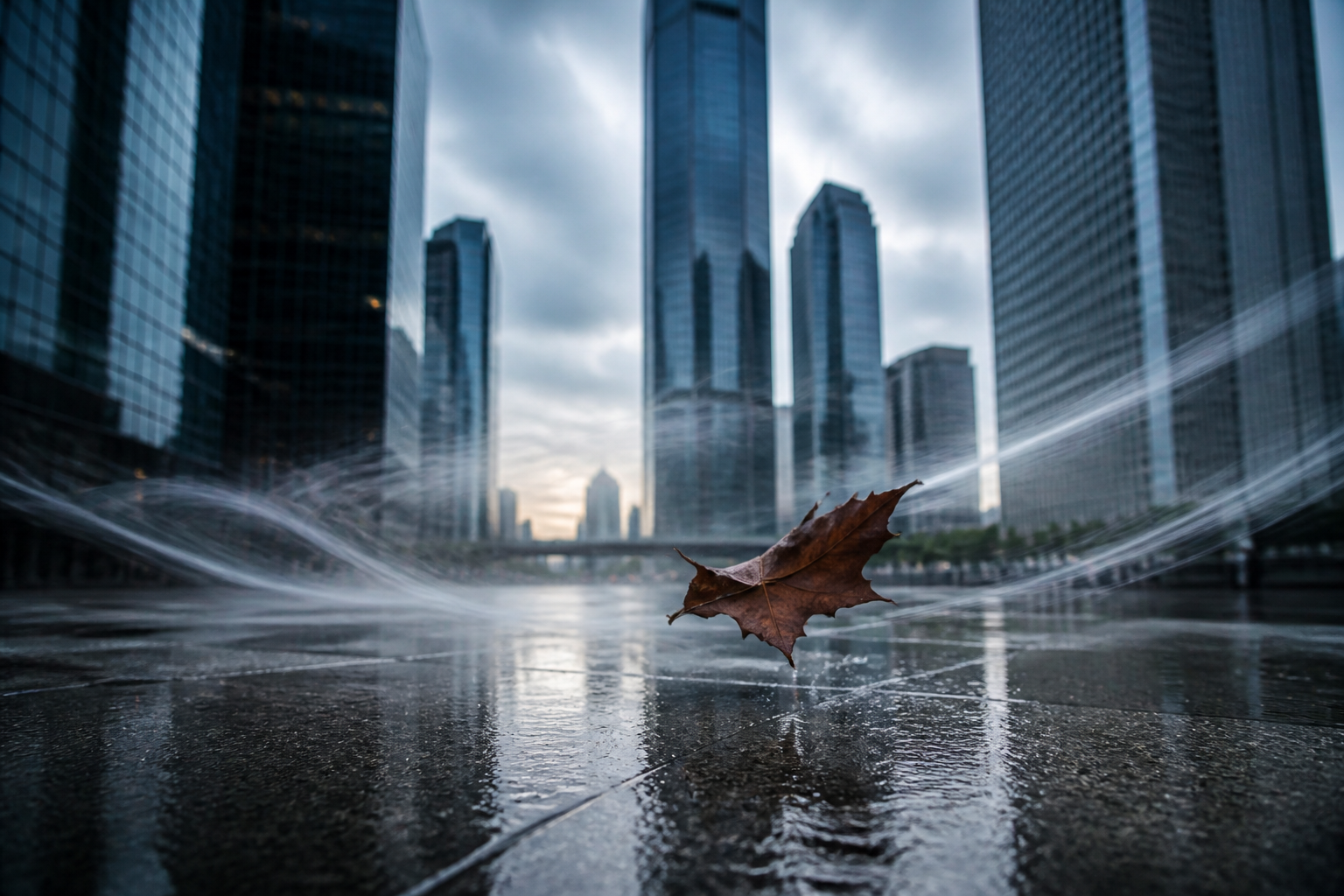
This isn't just a breezy inconvenience; it's a measurable hazard known as the 'downwash effect' or 'wind channeling.' When wind approaches a tall, flat-faced building, it can't just pass through. Instead, it hits the facade and is forced downwards and around the building at high speeds. As this accelerated air reaches street level, it creates intense vortices and high-velocity gusts that swirl around the base. The taller and wider the building, the more dramatic the effect, sometimes doubling or tripling the ambient wind speed at ground level.
Architects and engineers aren't oblivious to this problem. They employ various strategies, sometimes even using wind tunnels during the design phase to predict these downdrafts. One common solution involves incorporating features that disrupt the airflow, such as setbacks, textured facades, or even large canopies and screens at street level. These elements act like invisible deflectors, breaking up the strong downdraft and dispersing the wind before it can become a dangerous force. The goal is to create a more pedestrian-friendly environment, but the inherent physics of wind and solid objects mean the problem can only be mitigated, never entirely eliminated.
Without these deliberate design interventions, the wind speeds at the base of some of the world's tallest structures could easily exceed hurricane-force gusts, turning ordinary city streets into hazardous zones. These 'invisible walls' are a silent testament to the constant battle between human ambition and the relentless forces of nature. They remind us that even our most stable structures are constantly interacting with an unseen, powerful world, demanding clever solutions to keep us safe from the very air we breathe.
Two questions. Prove you actually read it.
Get both right and this discovery is certified: +50 XP toward your next rank. No account needed.
Sources (3) — tap to view
100 questions that make people say “wait, what?”
Get the complete Ultimate Trivia Pack instantly. It is free right now, works on mobile, and is printable.
10 episodes left in “Sound And Silence”.
You skipped ahead. Read the earlier episodes to unlock the full series.
Go to first unread episode
Discussion (0)
No account needed. Drop your name, say what surprised you.
Loading…