
Hairworms: The Parasites Forcing Insect Suicides
Imagine a worm growing inside you, manipulating your mind to force you into a watery grave. This isn't horror fiction; it's the shocking reality of the hairworm, a parasite that turns insects into suicidal zombies.
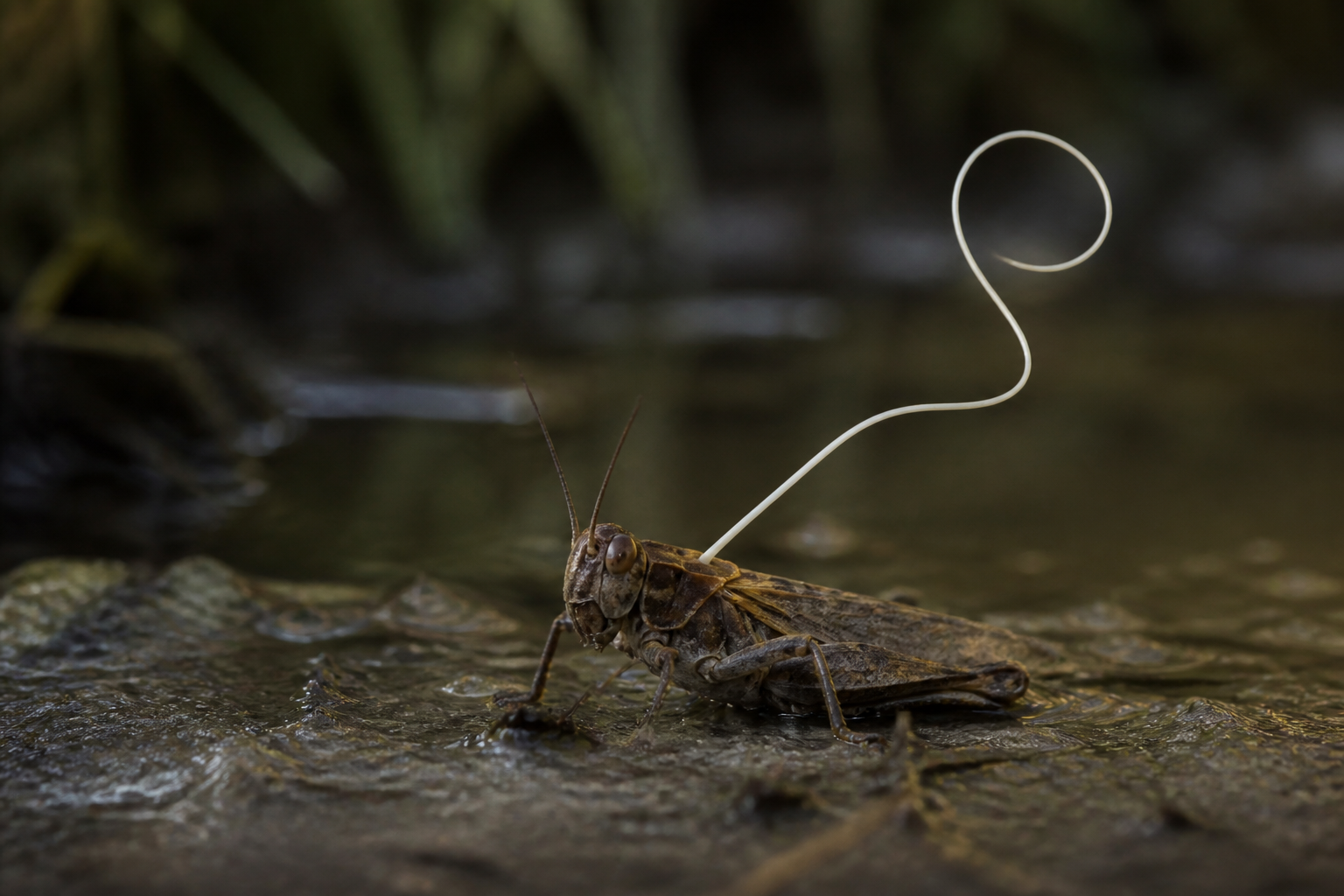
Imagine a completely normal cricket
Before the evidence lands — where do you already stand on this one?
Most people guess wrong here. Curious what you do.
- Imagine a worm growing inside you, manipulating your mind to force you into a watery grave. This isn't horror fiction; it's the shocking reality of the hairworm, a parasite that turns insects into suicidal zombies.
- The hairworm's life cycle is a testament to extreme adaptation.
- The sheer audacity of the hairworm's manipulation — forcing another creature to end its own life for the parasite's survival — makes it one of natu…
Deep in the guts of an unsuspecting cricket, a hairworm is growing. This isn't just any parasite; it's a master manipulator, slowly seizing control of its host's mind. Once it reaches maturity, typically a few weeks to several months after infection, it unleashes its final, most chilling command: find water, and jump in. The cricket, seemingly compelled by an invisible force, will abandon its terrestrial life, often traveling significant distances, until it finds a pond, stream, or even a puddle, then plunges to its death. Once submerged, the hairworm — sometimes astonishingly long, up to several times the length of its host — erupts from the cricket's body, free to find a mate and continue its life cycle. It's a gruesome ballet of mind control and forced suicide.
But how does a simple worm achieve such complex puppetry? The mechanism behind this extreme behavioral manipulation is still being fully unraveled, but science points to a sophisticated biochemical hijacking of the host's central nervous system. Hairworms, belonging to the phylum Nematomorpha, are thought to release neuroactive compounds that interfere with the cricket's innate aversion to water and its natural instincts. Studies have shown changes in the host's gene expression related to circadian rhythms, neurotransmission, and even light detection, suggesting the parasite isn't just telling the cricket what to do, but fundamentally altering how it perceives and interacts with its environment. The hairworm effectively rewires the cricket's brain, transforming a survival instinct into a death wish.
The hairworm's life cycle is a testament to extreme adaptation. It begins when larval hairworms are ingested by a terrestrial insect, usually through contaminated water or by consuming an intermediate host like a predatory beetle. Once inside, the larva penetrates the gut wall and encysts, slowly growing and developing within the insect's body cavity. During this phase, the cricket appears normal, unaware of the insidious passenger growing within it. The parasite strategically allows its host to thrive, ensuring it can grow to a size that maximizes its chances of reproduction once it emerges.
Two questions. Prove you actually read it.
Get both right and this discovery is certified: +50 XP toward your next rank. No account needed.
Sources (3) — tap to view
100 questions that make people say “wait, what?”
Get the complete Ultimate Trivia Pack instantly. It is free right now, works on mobile, and is printable.
14 episodes left in “The Tiny And Terrifying”.
You skipped ahead. Read the earlier episodes to unlock the full series.
Go to first unread episode
Discussion (0)
No account needed. Drop your name, say what surprised you.
Loading…